The Red Wine Health Myth: Why the Science No Longer Supports It
From the French Paradox to modern epidemiology — how flawed methodology, industry funding, and the carcinogenic reality of ethanol dismantled decades of wishful thinking.
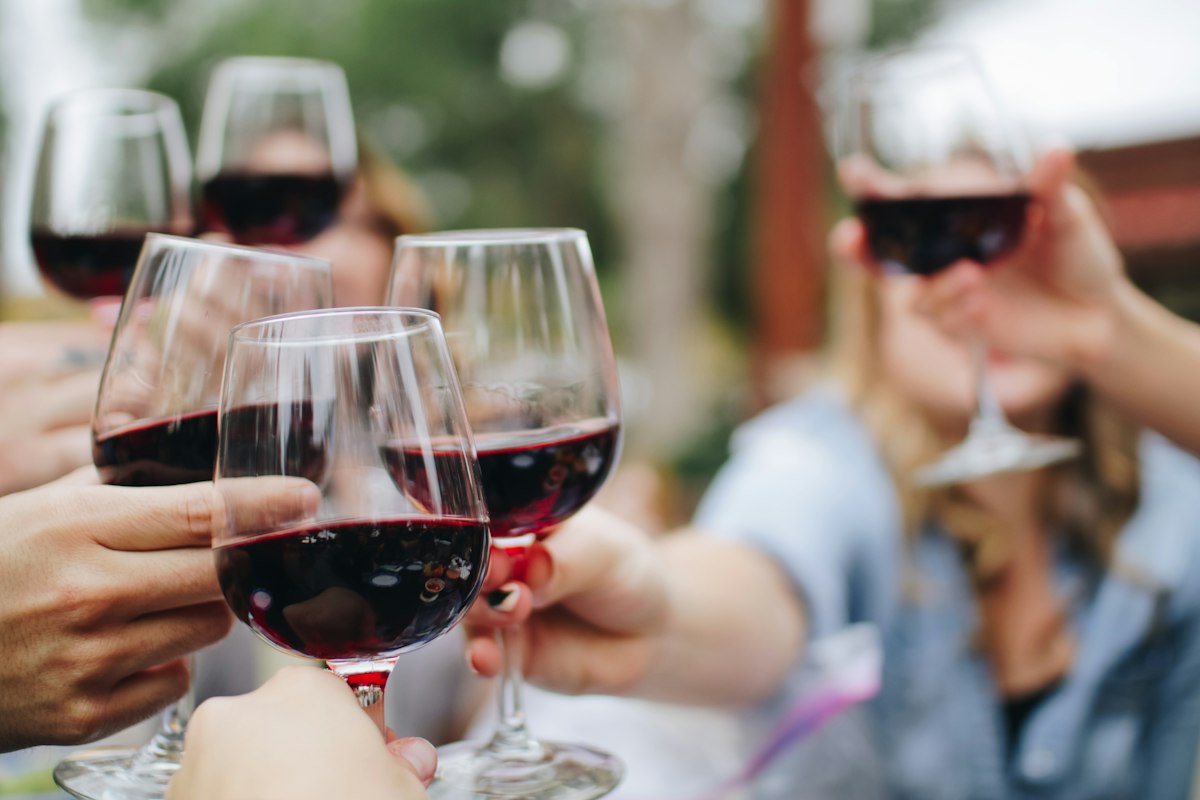
One minute, red wine is a superfood. The next, it causes cancer. The public oscillates between these headlines because the science itself has shifted — and understanding why reveals more about how research works than about wine itself. [WHO (2023)]
The short version: older observational studies suffered from fatal methodological flaws that made moderate drinkers look healthier than non-drinkers. When those flaws were corrected, the "benefit" disappeared entirely. Meanwhile, ethanol itself is classified as a Group 1 carcinogen by the same agency that classifies asbestos and tobacco. [IARC (2012)]
Here is the full breakdown — what the old studies claimed, why they were wrong, what modern science actually says, and how alcohol compares to cannabis when the biochemistry is examined honestly.
1. The French Paradox: Where the Myth Began
In 1992, researchers Renaud and de Lorgeril published a paper in The Lancet observing that the French — despite consuming diets extremely high in saturated fat — had remarkably low rates of coronary heart disease compared to other Western nations. They attributed this to the regular, moderate consumption of red wine. [Renaud & de Lorgeril (1992, The Lancet)]
The idea captured the public imagination. Red wine became a "health food." Resveratrol — a polyphenol antioxidant found in grape skins — was identified as the active compound, and in laboratory settings it demonstrated anti-inflammatory and blood-vessel-protective properties. [Kopp (1998, FASEB Journal)]
Light alcohol consumption was also linked to modestly elevated HDL ("good") cholesterol in small observational trials. These findings, combined with resveratrol's laboratory promise, became the foundation of the "red wine is good for you" narrative.
2. Why the Science Shifted: The Fatal Flaws
Over the following two decades, epidemiological methods improved significantly. Researchers applied more rigorous controls, larger sample sizes, and better statistical techniques. What emerged was a systematic dismantling of every major assumption behind the French Paradox.
The "Healthy User" Bias
People who drink red wine in moderation tend to have higher socioeconomic status, eat more vegetables, exercise more regularly, have better access to healthcare, and are less likely to smoke than heavy drinkers or non-drinkers. When studies failed to control for these variables, the health benefits of moderate drinking were actually the health benefits of being wealthier and more health-conscious. [Stockwell et al. (2016, Journal of Studies on Alcohol and Drugs)]
The "Sick Quitter" Flaw
Older studies grouped non-drinkers together without asking why they did not drink. This control group inadvertently included former heavy drinkers who had quit due to liver disease, heart failure, alcoholism, or other severe health conditions. Their poor health outcomes inflated the "non-drinker" baseline, making moderate drinkers appear healthier by comparison. [Stockwell et al. (2016, Journal of Studies on Alcohol and Drugs)]
The J-Curve Collapses
The most definitive correction came from the 2018 Global Burden of Disease study, published in The Lancet, which analysed data from 195 countries and 28 million participants. When the "sick quitter" and healthy user biases were properly accounted for, the J-shaped curve vanished. The conclusion was unambiguous: the lowest risk of health damage is achieved by consuming exactly zero alcohol. [GBD 2016 Alcohol Collaborators (2018, The Lancet)]
The WHO echoed this in 2023, stating plainly: "No level of alcohol consumption is safe for our health." [WHO (2023)]
3. The Carcinogen Problem: Ethanol Is a Group 1 Carcinogen
The International Agency for Research on Cancer (IARC), part of the WHO, classifies ethanol in alcoholic beverages as a Group 1 carcinogen — the highest risk category, shared with asbestos, tobacco, and plutonium. [IARC (2012)]
When the body metabolises ethanol, it converts it into acetaldehyde — a highly reactive chemical that directly damages DNA, prevents cells from repairing that damage, causes oxidative stress, and alters hormone levels. This is the foundational mechanism of carcinogenesis. [Boffetta & Hashibe (2006, Annals of Oncology)]
Alcohol is causally linked to at least seven types of cancer: mouth, throat, oesophagus, liver, colon, rectum, and breast. For breast cancer, the risk increases even at low consumption levels — as few as one drink per day. [Seitz et al. (2012, International Journal of Cancer)]
At the molecular level, the liver does not distinguish between ethanol from a $500 bottle of organic Pinot Noir and ethanol from a cheap plastic bottle of vodka. The metabolic pathway — and the carcinogenic output — is identical.
4. The Resveratrol Paradox: The Dosage Problem
Resveratrol is a real compound with real antioxidant properties. The problem is dosage. Peer-reviewed studies in nutritional toxicology have calculated that to absorb a biologically active, therapeutic dose of resveratrol from red wine, a human being would need to consume between 500 and 1,000 litres per day. [Walle et al. (2004, Drug Metabolism and Disposition)]
Long before anyone could achieve a single "antioxidant benefit," the 12% ethanol content would cause fatal acute alcohol poisoning. The resveratrol in red wine is toxicologically irrelevant at any survivable consumption level.
Crucially, resveratrol is freely available without ethanol. Grapes, blueberries, cranberries, peanuts, and even grape juice contain polyphenols and resveratrol — without the carcinogenic solvent. [Walle et al. (2004, Drug Metabolism and Disposition)]
5. The HDL Argument: A Marginal Gain, a Catastrophic Cost
It is true that light alcohol consumption can modestly raise HDL cholesterol — by roughly 1-2 mg/dL. However, this marginal cardiovascular benefit is obliterated by ethanol's systemic toxicity: liver damage, neurotoxicity, immune suppression, and carcinogenesis. [Stockwell et al. (2016, Journal of Studies on Alcohol and Drugs)]
Exercise, olive oil, nuts, and fatty fish raise HDL by comparable or greater margins without any of these toxicological costs. The HDL argument for red wine is like recommending chain-smoking for the nicotine boost — the delivery mechanism cancels any benefit.
6. Why the Media Keeps Flip-Flopping
The perception that "studies keep changing their minds" is partly real and partly manufactured:
Industry Funding: The alcohol industry has a documented history of funding research designed to produce favourable outcomes. A 2017 analysis in The Lancet found that industry-funded studies were five times more likely to conclude that moderate drinking was beneficial than independently funded studies. [Petticrew et al. (2017, Drug and Alcohol Review)]
Publication Bias: Positive results — "wine is good for you" — generate media attention and industry funding. Negative results — "wine causes cancer at any dose" — are less commercially attractive and receive less coverage.
Methodological Evolution: Science is self-correcting. The older, flawed observational studies were genuinely replaced by better ones. The "flip-flop" is actually science working as intended — but it leaves the public confused.
7. The Current Medical Consensus
As of 2025, the consensus among major health organisations is clear:
- WHO (2023): "No level of alcohol consumption is safe for our health." [WHO (2023)]
- GBD 2016 (The Lancet, 2018): The safest level of drinking is zero. [GBD 2016 Alcohol Collaborators (2018)]
- IARC: Ethanol is a Group 1 carcinogen — same category as asbestos and tobacco. [IARC (2012)]
- CDC: Any amount of drinking increases cancer risk. [CDC (2024)]
Whatever small cardiovascular boost polyphenols might offer is overwhelmed by the cellular damage caused by ethanol. The polyphenols are available elsewhere. The ethanol is the toxin.
8. Comparing Alcohol vs. Cannabis: A Biochemical Contrast
When examining how these two substances interact with the human body, the asymmetry is stark.
Alcohol (Ethanol)
Alcohol is a broad central nervous system depressant that enhances GABA activity and suppresses glutamate. In severe doses, it depresses the respiratory and cardiorespiratory centres in the medulla oblongata — the lower brainstem — making fatal acute alcohol poisoning entirely possible. [NIAAA (2007)]
Acetaldehyde — the toxic metabolite of ethanol — causes long-term metabolic strain, liver failure, neuroreceptor downregulation, and the neurochemical rebound effects responsible for hangover anxiety. [Boffetta & Hashibe (2006, Annals of Oncology)]
Cannabis (THC / CBD)
Cannabinoid receptors (CB1 and CB2) are concentrated in the cerebral cortex, basal ganglia, and hippocampus — but are virtually absent from the lower brainstem cardiorespiratory centres. Because of this, pure THC does not suppress the involuntary drive to breathe, giving cannabis an exceptionally wide biological safety margin compared to alcohol. [Lu & Mackie (2016, Biological Psychiatry)]
CBD and natural botanical terpenes — such as linalool and myrcene — do not cause ethanol-style organ toxicity. CBD acts as a negative allosteric modulator, buffering THC's negative side effects while calming nervous system tension without a toxic next-day hangover. [Iffland & Grotenhermen (2017, Cannabis and Cannabinoid Research)]
| Factor | Alcohol (Red Wine) | Cannabis |
|---|---|---|
| IARC Classification | Group 1 Carcinogen | Not classified as a human carcinogen |
| Fatal Overdose Risk | Yes — respiratory depression | No — no CB1 receptors in brainstem |
| Toxic Metabolite | Acetaldehyde (DNA-damaging) | None — fully metabolised |
| Organ Toxicity | Liver, brain, heart, pancreas | No documented organ toxicity |
| Margin of Exposure | MOE < 10 (high risk) | MOE > 10,000 (effectively infinite) |
The Verdict
The "red wine is good for you" narrative was built on flawed observational studies, industry-funded research, and a cultural desire to justify a socially embedded habit. The methodology has been corrected, the biases exposed, and the carcinogenic reality of ethanol established beyond dispute.
Resveratrol is a real antioxidant — but it is freely available in grapes, berries, and juice, without the ethanol. HDL can be raised more effectively by exercise. And the WHO, IARC, and Lancet all now agree: the safest amount of alcohol is none at all.
If a new pharmaceutical drug carried the same carcinogenic profile, addiction rate, and acute toxicity as red wine, it would be permanently banned within 24 hours. The health halo is a smokescreen. The metabolic math does not lie.
For deeper analysis, read our breakdown of the health halo effect, disease risk profiling, and why cannabis fits your biology.
Sources: [Renaud & de Lorgeril (1992), The Lancet] | [GBD 2016 Alcohol Collaborators (2018), The Lancet] | [Stockwell et al. (2016), Journal of Studies on Alcohol and Drugs] | [IARC (2012), Group 1 Carcinogen Classification] | [Walle et al. (2004), Drug Metabolism and Disposition] | [NIAAA (2007), Alcohol Metabolism: An Update] | [WHO (2023), No Safe Level of Alcohol] | [Lu & Mackie (2016), Biological Psychiatry] | [Boffetta & Hashibe (2006), Annals of Oncology] | [Petticrew et al. (2017), The Lancet] | [Iffland & Grotenhermen (2017), Cannabis and Cannabinoid Research] | [CDC (2024), Alcohol and Cancer Risk]